


Fit3D Scanner Used in New Clinical Study Linking Sleep Quality and Body Composition in Hip Pain Patients
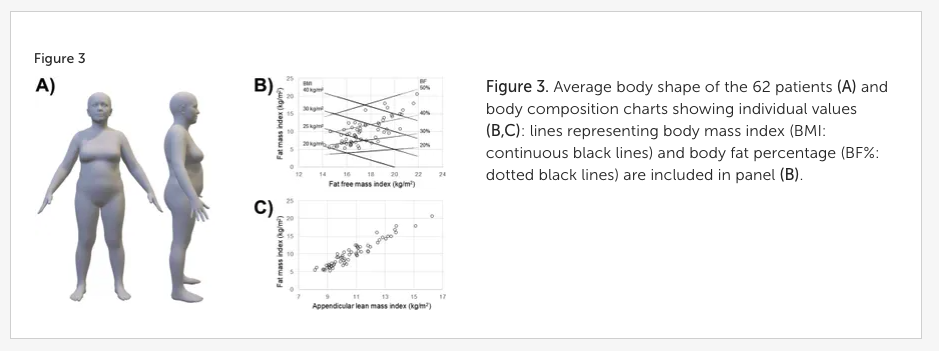
Fit3D’s 3D body-scanning technology was recently used in a new clinical research study examining how sleep patterns and body composition relate to the severity of Greater Trochanteric Pain Syndrome (GTPS), a common hip and gluteal tendinopathy. Researchers evaluated 62 female patients using digital anthropometry powered by the Fit3D ProScanner, allowing them to capture detailed whole-body measurements—waist and hip circumferences, body-fat percentage, fat-mass index, and shape metrics such as body-roundness index. This depth of detail gave the research team a clearer picture of central adiposity than traditional measures like BMI alone.
The study found that patients experiencing more severe GTPS symptoms also had higher levels of body fat—particularly around the midsection—as well as poorer sleep quality. Median body-fat percentage was 35.2%, and the median sleep score indicated disrupted or insufficient rest. Higher disability scores correlated with higher BMI, larger waist and hip measurements, greater fat mass, and shorter sleep duration. The authors concluded that increased adiposity and impaired sleep appear to be linked with worse tendinopathy outcomes—and that 3D digital anthropometry is a valuable, non-invasive tool for assessing these relationships in a clinical setting.
Read the full study here:
https://www.frontiersin.org/journals/medicine/articles/10.3389/fmed.2025.1718267/full
Research Profile: Marco - University of Turin




Subscribe to
our Newsletter!
