


Why Fit3D Moved Beyond Bulky Body Scanners
Body scanning has gone through the same evolution we’ve seen across nearly every category of technology.
When early body scanners like the Fit3D ProScanner and Styku launched in the early-to-mid 2010s, they were genuinely innovative. Large hardware, fixed sensors, and rigid capture methods were the best tools available at the time. And for their era, they worked.
But hardware and computing power have changed a lot since then.
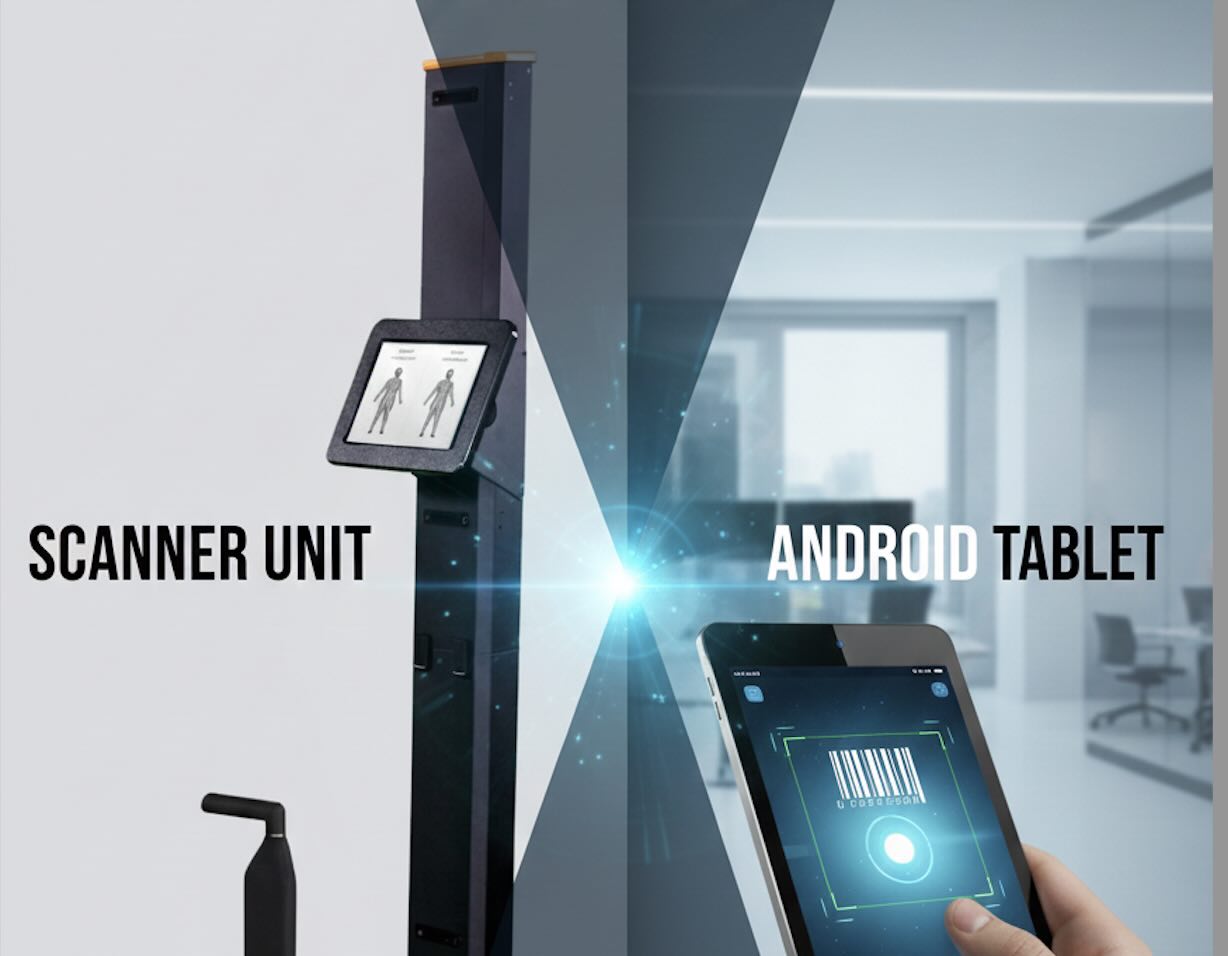
Fit3D has transitioned to a non-rigid capture approach paired with modern, high-resolution camera systems running on high-end Samsung tablets. This allows us to capture more detailed scan data while adapting to natural human movement—without relying on bulky enclosures or decade-old sensor designs.
The result is a system that’s:
- More accurate
- More consistent from scan to scan
- Less sensitive to posture and minor movement
- Easier to deploy and maintain
Older, hardware-heavy scanners were designed to compensate for rigid capture limitations. Modern body scanning doesn’t require massive machines—it requires better modeling and smarter use of today’s cameras. This makes sense if you think about it. Liekly, every computer or phone you've had in the last 2 years has been updated, with faster processors and smaller better cameras. The ProScanner was a big video camera. We are essentially updating it with a smaller better video camera.
By updating our architecture, Fit3D reduced scan failures, minimized rescans, and lowered technical support needs for operators. That means smoother onboarding, faster workflows, and a better experience for both staff and clients.
This shift mirrors what’s happened across technology as a whole. What once required specialized hardware now runs on powerful consumer devices—because the software got better.
Fit3D chose to evolve.
And that makes all the difference.
Want to understand the technical difference between rigid and non-rigid capture?
[Read the technical breakdown →]



Subscribe to
our Newsletter!
