


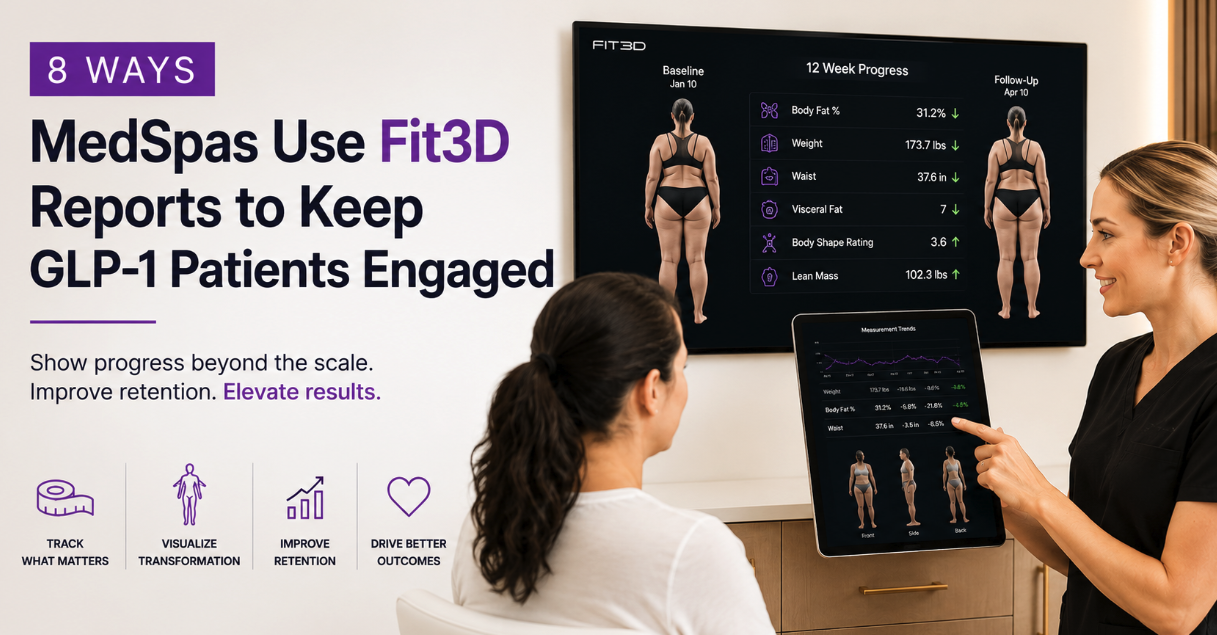
8 Ways MedSpas Use 3D Body Scans to Keep GLP-1 Patients Engaged
How Fit3D Reports Can Show Progress at Every Stage of the GLP1 Weight Loss Journey
GLP-1 medications are changing the weight loss industry. But one of the biggest challenges isn't getting patients started—it's keeping them motivated.
Many patients experience moments where they wonder if the medication is still working because the scale slows down or they don't yet see dramatic changes in the mirror.
That's why leading MedSpas are using Fit3D Reports to show patients measurable progress throughout their journey.
Every patient responds differently based on their medication, dosage, nutrition, exercise, protein intake, and overall health. The timeline below isn't intended to predict results. Instead, it's a practical guide to help your team know which Fit3D Reports are often the most valuable at different stages of treatment.
1. Start Every Journey with a Baseline (Week 0)
Every transformation begins with a first scan.
Use the initial assessment to establish:
- 3D Avatar
- Waist Circumference
- Body Fat Percentage
- Lean Mass
- Visceral Fat Estimate
- Body Shape Rating
Tell patients:
"Today's scan becomes the baseline of your transformation."
2. Celebrate Waist Changes Early (Weeks 2–6)
Patients often notice their clothes fitting differently before dramatic weight loss occurs.
Rather than focusing only on pounds lost, review:
- Waist Circumference
- Hip Circumference
- Body Shape Rating
This reinforces that progress is happening even when the scale moves slowly.
3. Explain What's Happening Inside the Body (Weeks 2–8)
Many patients don't realize that body composition changes before they notice major visual differences.
Review:
- Visceral Fat Estimate
These reports help patients understand that healthier body composition often begins before dramatic cosmetic changes.
4. Shift the Conversation from Weight to Body Fat (Weeks 6–12)
As treatment progresses, begin discussing:
- Body Fat Percentage
- Fat Mass
- Measurement Trends
- Side by Side Avatar Comparisons
- Overlay Report
Patients begin focusing less on weight and more on body composition.
5. Monitor Lean Mass Throughout Treatment (Months 2–6)
One of the biggest concerns with GLP-1 therapy is preserving muscle while losing fat.
Use Lean Mass trends to discuss:
- Protein intake
- Resistance training
- Healthy weight loss habits
The report becomes a coaching tool—not just a measurement.
6. Celebrate the Full Transformation (Months 3–6)
Compare today's scan with Day 1.
Review:
- Avatar Comparison
- Body Shape Rating
- Waist Changes
- Overall Measurements
This is often the appointment where patients finally see just how much they've changed. Try and get their permission to feature their results to other clients needing motivation!
7. Turn Every Follow-Up Into a Coaching Session
Rather than simply checking weight, use every appointment to review the patient's complete Fit3D Report.
The conversation shifts from:
"How much weight did I lose?"
to
"Here's how your body has changed since your last visit."
That creates a far more engaging patient experience.
8. Turn Every Patient Into Your Next Case Study
With patient permission, document the entire journey.
Instead of relying on a single before-and-after photo, create a complete transformation story using:
- 3D Avatar Comparisons
- Waist Circumference Trends
- Body Fat Changes
- Lean Mass Progress
- Body Shape Rating
- Timeline Reports
These case studies become some of your clinic's most powerful marketing assets, helping future patients understand what's possible while building trust in your program.
The Bottom Line
The scale tells patients how much they've lost.
Fit3D helps them see how their body is changing.
When patients can visualize progress throughout every stage of treatment, they're more likely to stay engaged, celebrate milestones, and remain committed to their transformation.



Subscribe to
our Newsletter!
