


Why Women's Health Clinics Are Choosing Body Composition Over Weight
How a Women's Health Clinic in Brazil Uses 3D Body Scanning to Improve Patient Engagement, Track GLP-1 Outcomes, and Monitor Hormonal Health
Many women's health clinics are moving beyond weight and BMI as primary health metrics because they often fail to capture important changes in fat distribution, muscle mass, and metabolic health. Body composition tracking provides a more complete picture, especially for women navigating perimenopause, menopause, hormone optimization, metabolic health programs, and GLP-1 treatments.
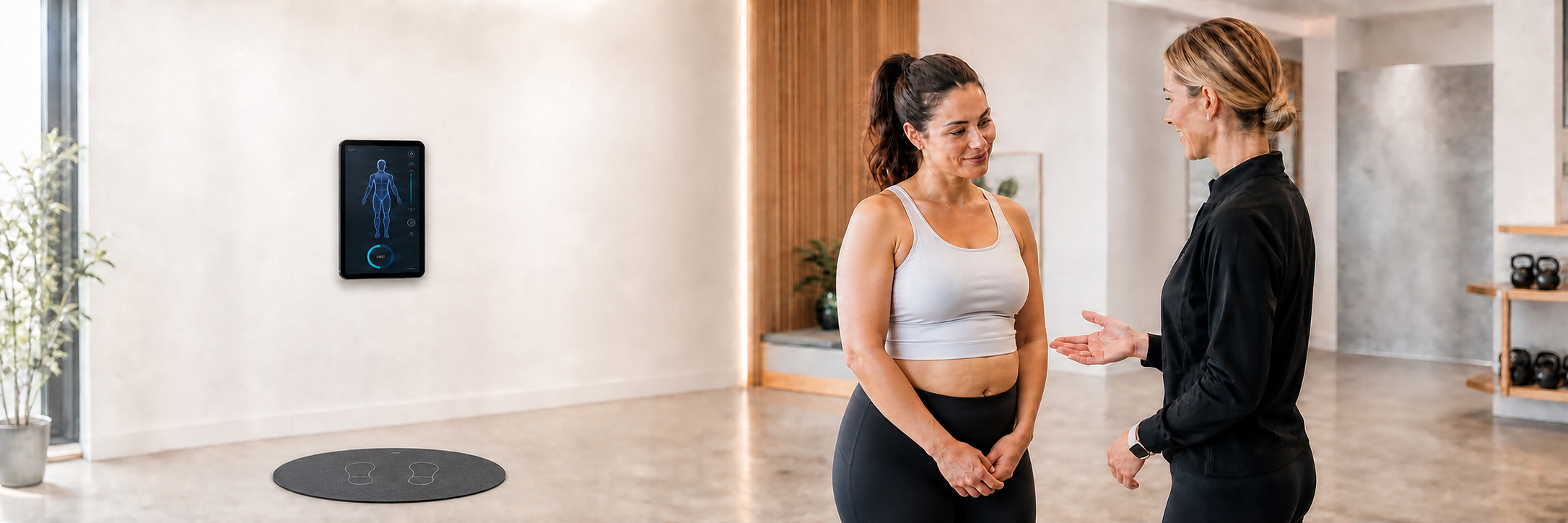
At Instituto Dela in Brazil, 3D body scanning has become an important tool for helping patients visualize progress, monitor body composition changes, and stay engaged throughout treatment.
Why Is Weight Alone Often Misleading?
For decades, weight has been one of the most common measurements used in healthcare and wellness programs.
However, weight alone cannot answer important questions such as:
- How much body fat does a patient have?
- Where is fat distributed throughout the body?
- Is a patient gaining or losing muscle?
- Has visceral fat increased?
- Is a treatment improving body composition?
Two people can weigh exactly the same amount while having dramatically different levels of body fat, lean mass, and metabolic risk.
This becomes especially important for women experiencing hormonal transitions.
According to Paulo Gusmão, MD, founder of Instituto Dela:
"A woman can be within normal BMI and still have a metabolically dangerous body composition. The scale misses this entirely."
For healthcare providers focused on long-term wellness outcomes, body composition often tells a more complete story than body weight alone.
Why Is Body Composition Important During Perimenopause and Menopause?
Hormonal changes during perimenopause and menopause often affect body composition in ways that are not immediately obvious on a scale.
As estrogen levels decline, women frequently experience:
- Increased visceral fat accumulation
- Reduced lean muscle mass
- Changes in fat distribution
- Slower metabolism
- Increased cardiometabolic risk
Many women become frustrated because they feel different physically even though their weight has changed very little.
According to Dr. Gusmão:
"In perimenopause and menopause, estrogen loss drives visceral fat accumulation and lean mass reduction even when total weight stays the same."
Traditional measurements often fail to identify these changes.
Body composition tracking provides clinicians with additional insight into how hormonal changes are influencing overall health.
At Instituto Dela, body composition serves as an important baseline for evaluating patient progress across metabolic health and hormone optimization programs.
Why Are Women's Health Clinics Paying Attention to Lean Mass?
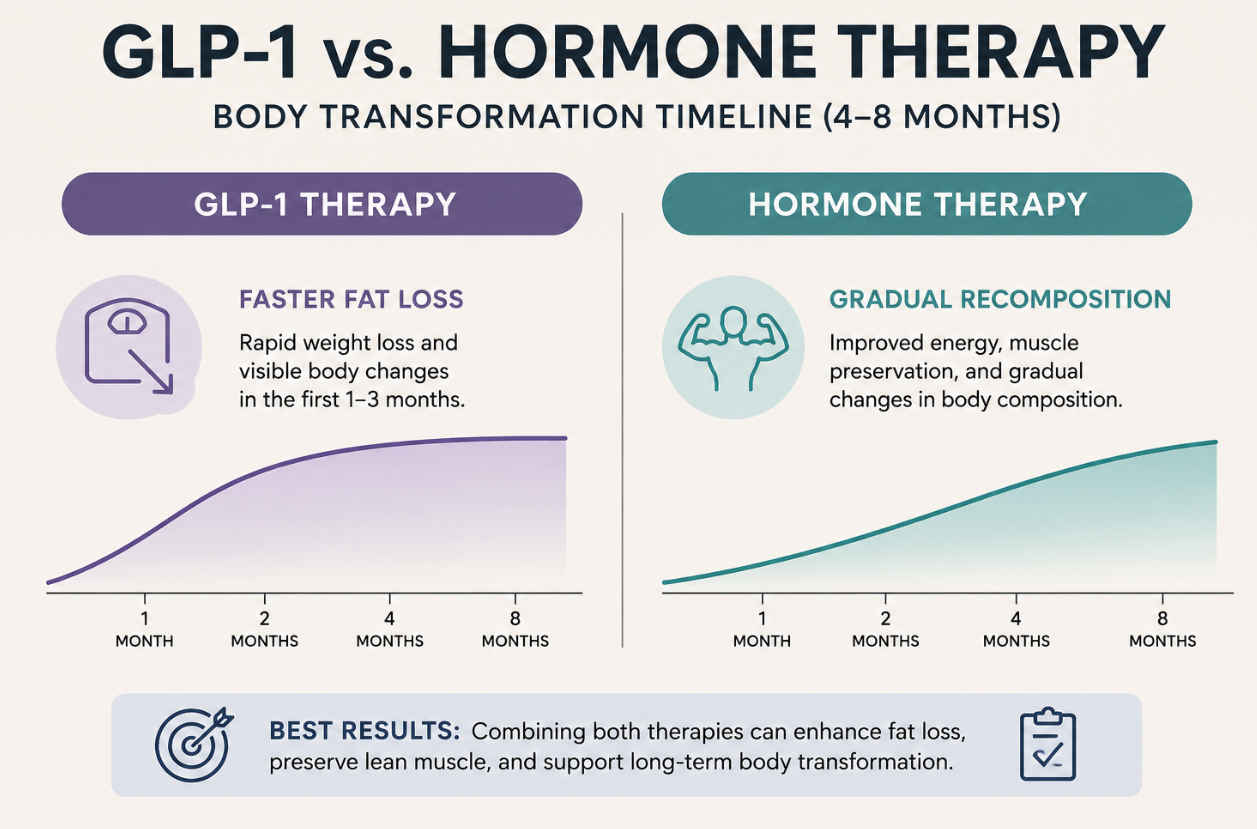
One of the fastest-growing areas in healthcare is the use of GLP-1 medications and dual agonists for weight management and metabolic improvement.
While these medications can be highly effective for fat loss, healthcare providers are increasingly concerned about preserving muscle mass during treatment.
Weight loss alone is not always a positive outcome if significant lean tissue is lost in the process.
Dr. Gusmão explains:
"For patients on GLP-1 or GIP/GLP-1 agonists, the risk of losing lean mass is real and underappreciated."
This has led many clinics to shift their focus away from total weight loss and toward body composition outcomes.
Providers want to see:
- Fat reduction
- Lean mass preservation
- Improved metabolic markers
- Sustainable lifestyle changes
According to Instituto Dela:
"A scan that shows fat loss with preserved or increased lean mass is a clinical result, not just an aesthetic one."
As GLP-1 adoption continues to expand, body composition monitoring is becoming an increasingly valuable tool for evaluating treatment effectiveness.
How Does Visual Progress Improve Patient Engagement?
One of the most interesting findings from Instituto Dela has been how patients respond to visual feedback.
Many clinics provide patients with numbers, charts, and laboratory results.
While those metrics are important, they do not always create an emotional connection.
Visual progress often does.
According to Dr. Gusmão:
"What actually moves our patients is the 3D avatar with color mapping. They can see exactly where fat is distributed and compare scans side by side with clear before-and-after tables. That visual feedback hits differently than a number on a report."
Patients can visualize:
- Fat distribution patterns
- Body shape changes
- Circumference reductions
- Side-by-side comparisons
- Before-and-after progress
The clinic reports that patients become highly engaged when they can see changes occurring throughout the body.
"Patients come in excited to see their scan, not just their lab results."
That level of engagement can reinforce healthy behaviors between appointments and improve adherence to treatment plans.
Can Body Composition Tracking Improve Patient Retention?
Patient retention is a major challenge for many wellness, medical weight loss, and hormone optimization practices.
Many programs require months of participation before meaningful outcomes become visible.
Keeping patients motivated during that period is critical.
Instituto Dela discovered an unexpected advantage.
Patients began scheduling scans independently between consultations.
Dr. Gusmão explains:
"Scans no longer require a consultation slot. Patients purchase scan packages and come in biweekly on their own. That changed the dynamic completely."
This created a new touchpoint between visits.
Instead of waiting for their next physician appointment, patients could monitor progress regularly.
According to the clinic:
"Before, we could only assess progress during appointments. Now patients are self-monitoring between consultations, and it shows in their results."
The clinic also observed that patients are reaching goals faster than expected.
"Patients are hitting their goals faster than expected. I attribute part of that to the visual feedback keeping them accountable between visits."
For wellness clinics, medical weight loss centers, and hormone optimization providers, creating more touchpoints between appointments can improve both engagement and long-term retention.
Why International Clinics Are Choosing App-Based 3D Body Scanning
Historically, body scanning technology required dedicated hardware that had to be manufactured, shipped internationally, installed on-site, and supported across borders.
For many clinics outside the United States, that created additional challenges:
- International shipping costs
- Customs delays
- Import duties and tariffs
- Hardware maintenance concerns
Instituto Dela implemented SNAP using a compatible Android tablet, eliminating the need to import specialized scanning equipment.
Because the platform is app-based, clinics can get started quickly without waiting for hardware to arrive, clear customs, or be installed by a technician.
This approach has made 3D body scanning more accessible to clinics worldwide, particularly in markets where traditional body scanning systems can be expensive to purchase, difficult to ship, or costly to maintain.
For international providers, the ability to deploy a body scanning solution using locally available hardware can significantly reduce implementation costs and simplify expansion across multiple locations.
What Makes Body Composition Tracking Different From Traditional Weight Loss Programs?
Many weight loss programs focus primarily on one outcome: lower body weight.
Women's health clinics increasingly recognize that health is more complex.
Factors such as:
- Hormonal status
- Muscle preservation
- Fat distribution
- Metabolic health
- Functional performance
can be equally important.
At Instituto Dela, treatment plans are built around four core areas:
- Metabolic Health
- Hormonal Health
- Physical & Cognitive Performance
- Aesthetic Rejuvenation
This broader approach changes how success is measured.
As Dr. Gusmão describes:
"The combination of hormonal management, pharmacotherapy, and body composition tracking under one roof is what makes the approach different from a weight loss clinic."
"Weight loss clinics treat weight. We treat body composition in the context of a woman's hormonal age."
That philosophy reflects a growing trend throughout women's health, longevity medicine, and modern metabolic care.
Frequently Asked Questions
What is the difference between weight and body composition?
Weight measures total body mass. Body composition measures the proportions of fat, muscle, and other tissues that make up that weight.
Why is body composition important during menopause?
Menopause often causes changes in fat distribution and muscle mass that may not be reflected by body weight alone. Body composition tracking provides greater insight into metabolic health and treatment outcomes.
Can someone have a healthy BMI but unhealthy body composition?
Yes. A person can fall within a normal BMI range while still carrying excess body fat or experiencing low muscle mass.
Why do women's health clinics use 3D body scanning?
3D body scanning helps visualize body shape, measurements, and changes over time, making progress easier for patients and providers to understand.
Why is lean mass important during GLP-1 treatment?
Preserving muscle mass supports long-term metabolic health, physical function, strength, and healthy aging while patients lose fat.
Can patients scan between appointments?
Yes. Many clinics offer standalone scan packages that allow patients to monitor progress between consultations, creating additional engagement opportunities and accountability.
Key Takeaways
Women's health clinics are increasingly using body composition tracking because weight alone often fails to capture meaningful health changes.
For women navigating menopause, hormone optimization, metabolic health programs, and GLP-1 treatments, body composition can provide a more complete picture of progress than the scale alone.
Instituto Dela's experience demonstrates that visual body composition tracking can help patients:
- Better understand their health
- Stay engaged throughout treatment
- Monitor progress between appointments
- Focus on fat loss while preserving muscle
- Visualize changes that traditional metrics miss
As healthcare continues moving toward personalized and preventative care, body composition is becoming one of the most valuable metrics for evaluating patient outcomes.
For many providers, the future of women's health is not simply about helping patients lose weight.
It is about helping them improve body composition, metabolic health, muscle preservation, and long-term quality of life.
3D body scanning has become an important tool for helping patients visualize progress, monitor body composition changes, and stay engaged throughout treatment.

Subscribe to
our Newsletter!
