


ShapeScale Alternative: Fit3D vs ShapeScale for Medspas
ShapeScale Alternative: Fit3D vs ShapeScale
If you’re researching ShapeScale, you’re probably trying to solve a simple problem:
How do you show clients their body changing over time?
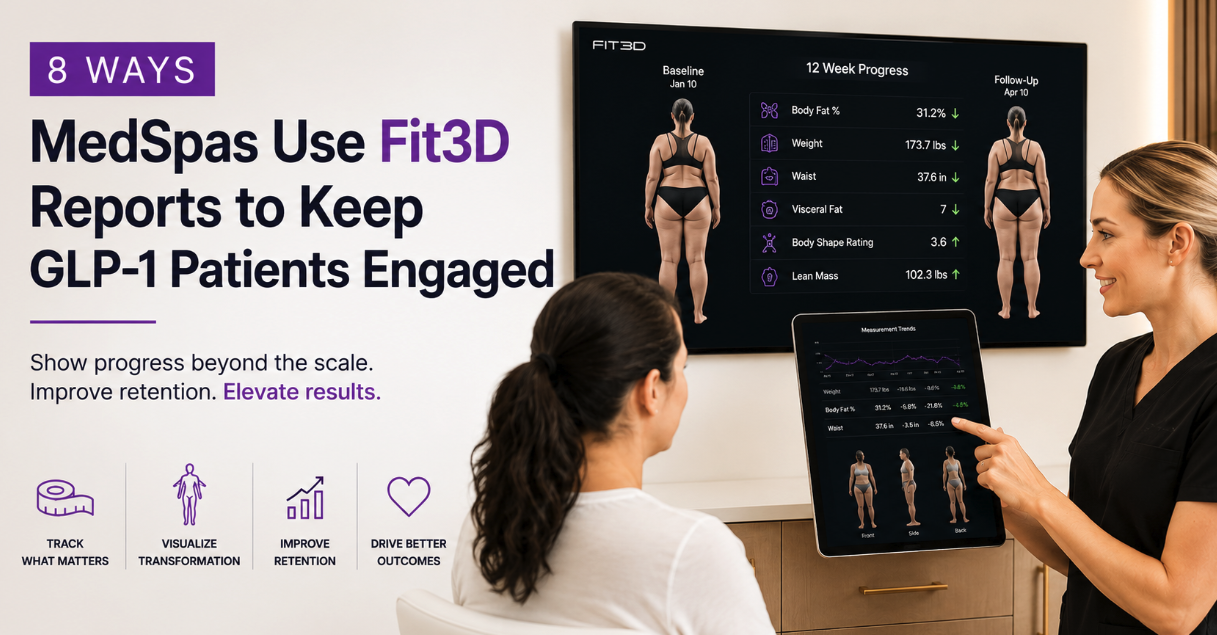
3D body scanning makes this possible. Instead of relying on scale weight alone, clients can see fat loss, muscle gain, and body shape changes visually.
ShapeScale helped popularize this technology through a healthy round of marketing ad buys.
But today, many medspas are also looking at a popular alternative: Fit3D.
Below is a simple breakdown of ShapeScale vs Fit3D so you can quickly understand the differences.
Quick Summary: ShapeScale vs Fit3D
Both systems solve the same core problem: Showing Changes in body shape changes visually.
Both platforms offer:
• 3D body avatars
• Color body visualizations
• Circumference measurements
• Body composition estimates
• Progress comparisons between scans
• Transformation tracking over time
In other words, both systems can accurately track body change.
The biggest differences are price, deployment model, and software built for businesses.
Fit3D vs ShapeScale Report Comparisons
• Full Color 3D Body Avatars - Both
• Accurate Body Composition Estimates - Both
• Circumference Measurements - Both
• Before & After Comparisons - Both
Fit3D Used to Be a $10,000 Scanner Too
Some people assume Fit3D is cheaper because it’s a simpler system. That’s not the case.
Fit3D originally sold a large hardware-based scanner that cost around $10,000, very similar to the traditional scanning systems used across the industry.
The original system included:
• Dedicated scanning hardware
• A rotating platform
• Multiple sensors and cameras on a tower
• A fixed installation space
In other words, Fit3D started with the same bulky hardware approach. But as AI, mobile cameras, and computer vision improved, the company realized something important:
The expensive hardware was no longer necessary. It was an outdated approach which was very expensive. We felt the right thing to do was to innovate and pass on the savings to customers.
Fit3D rebuilt the platform from a software perspective.
Why is Fit3D so Affordable?
By removing the hardware dependency, Fit3D was able to:
• Eliminate expensive manufacturing
• Remove shipping and installation costs
• Improve reliability by removing mechanical parts
The result is a modern AI-driven scanner that runs on a tablet instead of a large machine.
Because the system is software-based, the cost dropped dramatically.
But the scan outputs, body measurements, and reports actually got better.
Fit3D didn’t become cheaper because it became worse. It became more affordable because the technology improved – that's what great companies take advantage of.
Where ShapeScale Still Stands Out
ShapeScale still has one major advantage:
Novelty.
The scanner itself looks cool. For some studios, that visual “wow factor” can be appealing during a demo or first client visit.
However, ShapeScale was originally built as a consumer product and later expanded into B2B sales. The underlying technology here hasn't changed too much in the last 10 years. It's actually using the same technology it introduced back in 2017 with it's kickstarter campaign. That tech is literally 10 years old.
Fit3D took a different approach.
Instead of focusing on a large physical device, the newest Fit3D system was designed to blend into professional spaces.
The Fit3D SNAP system:
• Requires no dedicated floor space
• Runs on a standard tablet
• Can be deployed in minutes
Many medspas choose a wall-mounted setup, which keeps the room clean, branded, and functional.
This allows operators to create a simple scan zone that fits naturally into their clinic design, instead of dedicating space to a large piece of equipment. And, those that want to add more "wow factor" through interior design, have an extra $8000 in their pocket to do that with.
For many studios and medspas, the goal isn’t novelty. It’s providing a professional experience that integrates seamlessly into their space and workflow. We allow that level of customization.
Fit3D’s Professional Cloud Dashboard
Another major difference between the platforms is the software experience. Most operators want more than just a consumer app.
Fit3D includes a cloud-based dashboard built for clinics.
Operators can:
• Track client scan history on larger screens
• Compare scans over time to validate treatments
• Manage multiple clients
• Access reports from anywhere on any size device
This setup gives operators the tools to grow their business as a staff, versus viewing scans on in an app.
Pricing Comparison
One of the biggest differences between the two systems is cost.
ShapeScale Cost: $9,900 (link) to buy OR they offer a $299/mo to lease.
Fit3D SNAP Cost: $160 hardware + 100/mo subscription.
The Bottom Line
ShapeScale and Fit3D both allow businesses to:
• Capture 3D body scans
• Track body composition
• Show clients visual progress
Both systems can produce accurate and motivating transformation reports.
The biggest difference is simply how the technology is delivered.
• ShapeScale uses a older and larger 3d capture sensors in a nice industrial design package.
• Fit3D uses AI and modern mobile hardware to achieve similar results at a fraction of the cost.
Try Fit3D Before You Buy ShapeScale
If you’re considering ShapeScale, it’s worth exploring the newer approach first. Fit3D's billing is month to month, so there is very little risk.
Fit3D delivers similar scan reports, body measurements, and 3D avatars without the expensive hardware. If you're considering ShapeScale, you owe it to yourself to try Fit3D first — and potentially save $9,000.
Learn more about the Fit3d Scanner here

Subscribe to
our Newsletter!
