


Comparing GLP-1 vs. Hormone Therapy Body Transformations
GLP-1 vs. Hormone Therapy: Which Produces Faster Body Transformation?
Patients beginning a medical weight loss or hormone optimization program often ask the same question:
"How quickly will I see changes in my body?"
The answer depends on the type of treatment.
While both GLP-1 medications and hormone replacement therapy (HRT) can improve body composition, they typically produce different timelines and different types of physique changes. Many wellness clinics now offer both treatments because they complement one another throughout a patient's transformation journey.
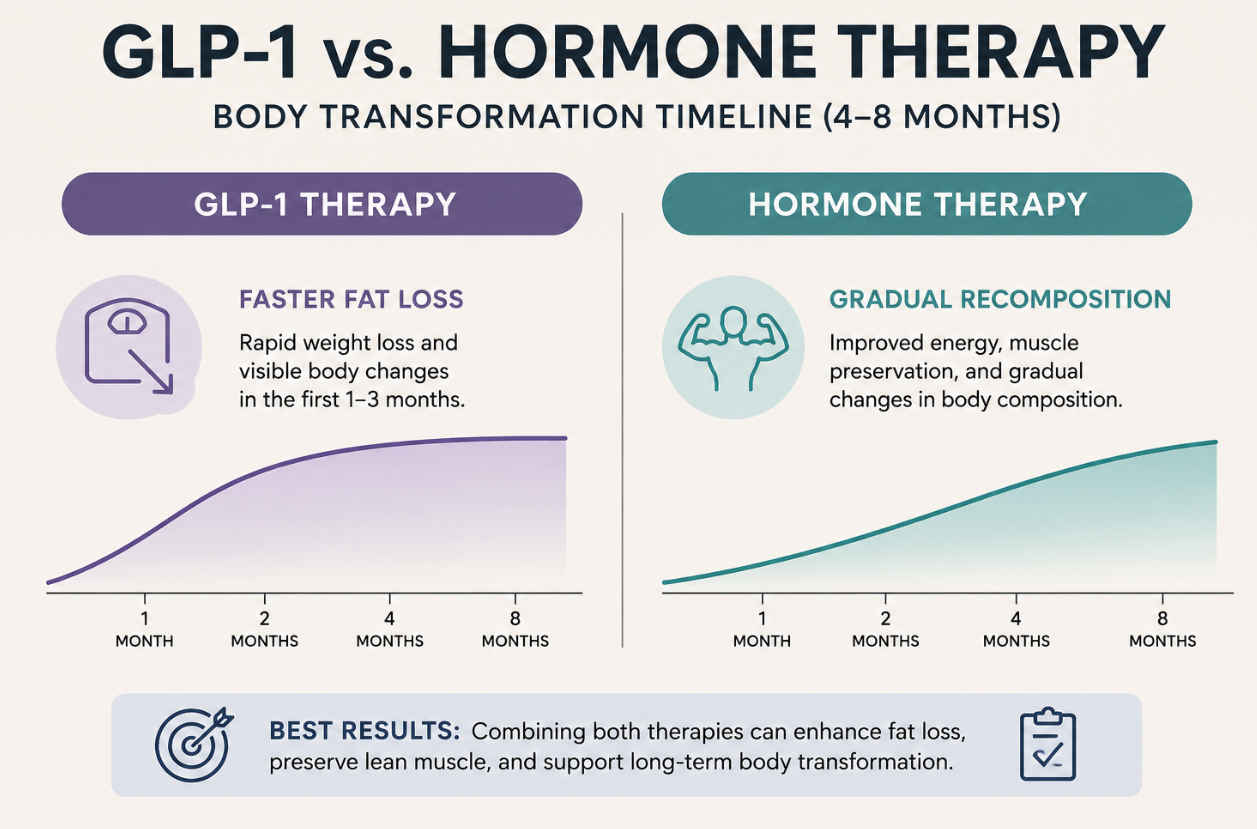
GLP-1 vs. Hormone Therapy: Body Transformation Timeline
TimeGLP-1 TherapyHormone Therapy
Month 1:
Weight loss often begins quickly. Many patients notice a smaller waist and looser-fitting clothes.Most changes occur internally, including improvements in energy, sleep, and recovery. Visible physique changes are usually modest.
Months 2–3:
Fat loss becomes increasingly noticeable, with measurable reductions in body circumference.Body composition may begin improving as muscle is maintained or gained while fat gradually decreases.
Months 4–8:
Continued fat loss often produces dramatic before-and-after comparisons.Physique changes become more apparent, with patients often looking leaner, stronger, and more athletic rather than simply lighter.
Why GLP-1 Produces Faster Visible Results
GLP-1 medications such as semaglutide and tirzepatide reduce appetite, helping many patients maintain a calorie deficit. As body fat decreases, changes in waist size, body shape, and overall appearance can often be seen within the first several weeks.
This is why GLP-1 programs frequently generate dramatic before-and-after transformation photos and why 3D Scans are so impactful for business owners.
Why Hormone Therapy Changes the Body Differently
Hormone optimization typically works through different mechanisms.
Rather than causing rapid weight loss, it may improve metabolism, recovery, sleep, energy, and the body's ability to preserve or build lean muscle. Over time, patients may lose fat while maintaining muscle mass, creating a leaner physique even when the scale changes slowly.
This process is often referred to as body recomposition.
Why Many Clinics Offer Both
Some medical weight loss clinics combine GLP-1 therapy with hormone optimization because the treatments can complement one another.
A common patient journey looks like this:
- Months 1–3: Rapid fat loss through GLP-1 therapy.
- Months 3–8: Continued fat loss while focusing on muscle preservation, strength, energy, and long-term body composition through hormone optimization.
The result isn't simply a lower body weight—it can be a healthier body composition with less fat and more lean tissue.
Why Tracking Body Composition Matters
A traditional scale only reports total body weight.
It cannot show whether a patient is losing fat, preserving muscle, or changing body shape.
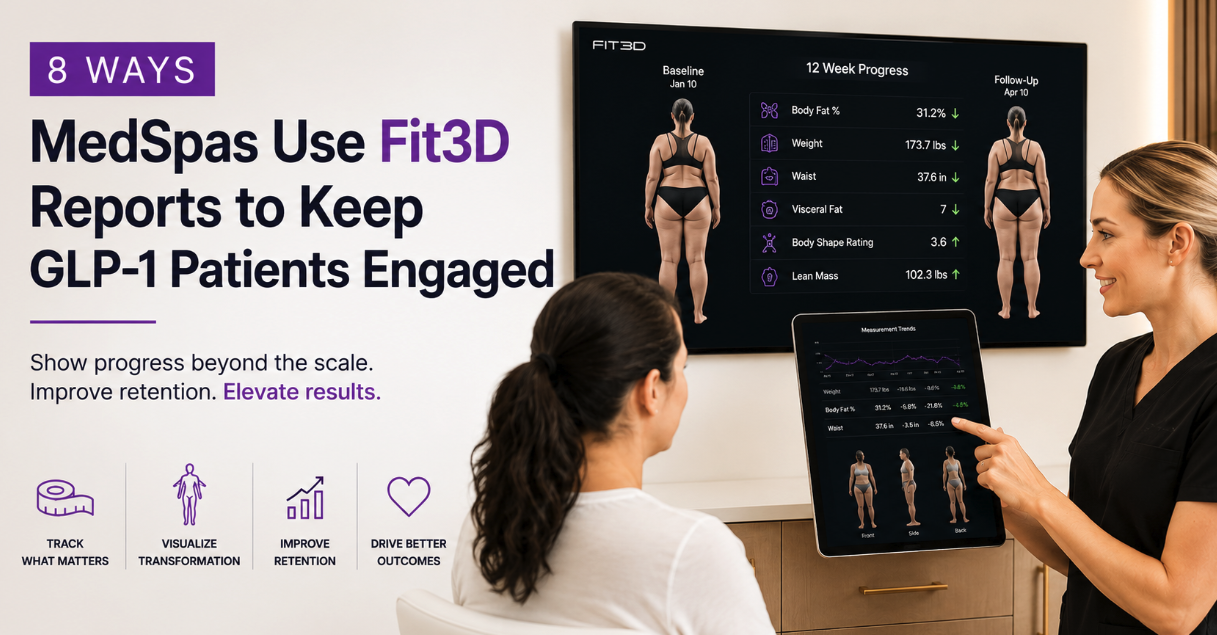
This is one reason many clinics use Fit3D body scanning throughout treatment. Fit3D clients commonly use 3D body scans to visualize changes in body shape, circumference measurements, posture, and estimated body composition over time. Instead of relying only on the number on the scale, patients can see how their body is transforming from month to month.
For providers, these visual reports can improve patient engagement by helping celebrate progress that might otherwise go unnoticed.
Frequently Asked Questions
Does GLP-1 cause faster body changes than hormone therapy?
In many cases, yes. GLP-1 medications often produce visible fat loss within the first one to two months, while hormone therapy generally leads to more gradual body recomposition over several months.
Can you take GLP-1 medications and hormone therapy together?
Some healthcare providers prescribe both when appropriate for an individual patient. Because these therapies serve different purposes, they may complement each other as part of a broader treatment plan. Patients should always discuss the risks and benefits with their healthcare provider.
What is the best way to track body transformation?
Body weight is only one measure of progress. Circumference measurements, progress photos, body composition estimates, and 3D body scans can provide a more complete picture of how a patient's physique is changing throughout treatment.
The Bottom Line
GLP-1 medications often provide the momentum of rapid fat loss, while hormone optimization may support long-term muscle preservation, energy, and body recomposition.
For clinics offering both services, objective body composition tracking helps patients see the complete story of their transformation—not just the number on the scale. Many Fit3D providers use 3D body scanning to document these changes, educate patients, and keep them engaged throughout the first 4–8 months of their wellness journey.

.png)
Subscribe to
our Newsletter!
