


New Clinical Research on FIt3D Shows Client Satisfaction after abdominoplasty
Quick Summary of the New Research
A recent study published in Frontiers in Surgery evaluated how to measure body changes in patients after major weight loss and reconstructive procedures.
Researchers used 3D body scanning to track patients before and after surgery and found:
- Significant reductions in waist, hips, and thigh measurements
- Measurable decreases in body volume
- Little to no change in total body weight
- Dramatic improvements in patient satisfaction
Most importantly:
Body shape and measurement changes—not weight—were the clearest indicators of success.
The study also highlighted that visualizing results through 3D avatars improved patient understanding and satisfaction, making body scanning a valuable tool for both clinicians and patients.
Read the full study:
https://www.frontiersin.org/journals/surgery/articles/10.3389/fsurg.2026.1728844/full
The Problem with the Scale for Body Transformations
GLP-1 treatments like Ozempic, Wegovy, and Mounjaro are changing how patients lose weight—but they’re also exposing a major problem:
The scale doesn’t tell the full story.
Patients can lose fat, reduce inches, and dramatically change their body shape…
while the number on the scale barely moves.
For clinics, medspas, and fitness professionals, this creates a challenge:
- Clients feel like they’re not progressing
- Results are harder to communicate
- Retention and upsells become more difficult
The Solution: Show clients how & where the changes took place with 3d scans.
Clinical Validation Is Already an Expected Standard for Body Scanners
In the body composition space, clinical validation is not new.
Companies like SECA, InBody, and other body comp technologies have built their brands around:
- Accuracy
- Repeatability
- Clinical-grade data
And that matters. But almost every body composition vendor has been clinically validated – that's table stakes to be in this space. Most modern body composition tools are already “clinically validated.”
That alone is no longer a differentiator.
The Real Gap: Data vs. Client Motivation
This study highlights something more important than accuracy:
Patients improved because they could see and understand their results.
Even more interesting:
- Satisfaction did not strongly correlate with exact measurements
- It correlated with visual understanding and perceived transformation
Why This Matters for GLP-1 Programs
GLP-1 programs are accelerating this shift.
Patients often:
- Lose fat
- Drop inches
- Improve body shape
But:
- The scale moves slowly
- Or doesn’t move at all
Without the right tools:
- Clients lose motivation
- Results feel unclear
- Programs feel less effective
From Clinical Data to Client Engagement
This is where most solutions fall short.
They provide:
- Accurate data
- Clinical reports
- Body fat percentages
But they don’t:
- Help clients see their progress
- Help staff sell the transformation
- Help businesses drive retention
How 3D Body Scanning Bridges the Gap
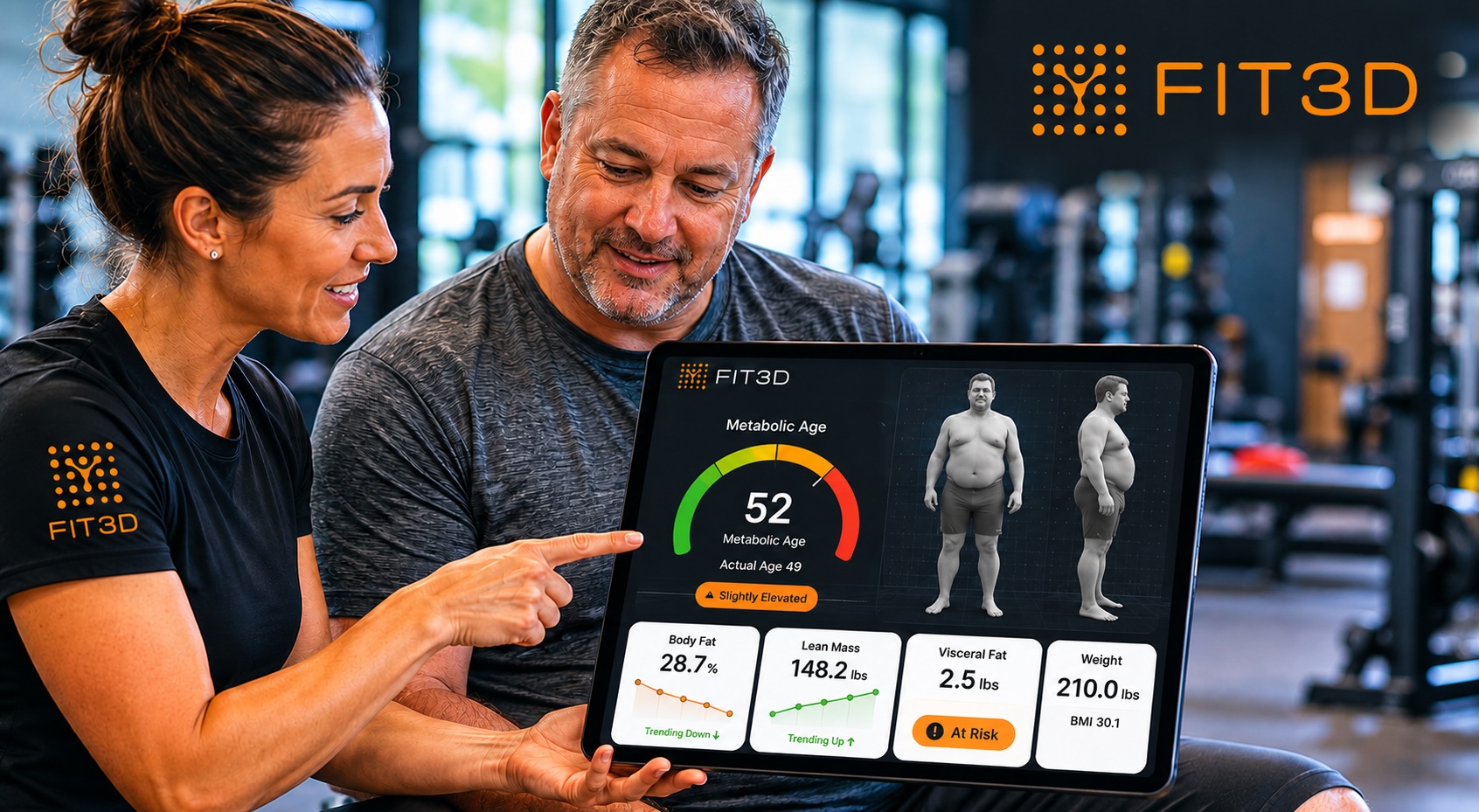
Modern 3D body scanning connects clinical data + visual storytelling.
Clinics can now:
- Track inches lost across the entire body
- Measure volume and shape changes
- Generate full 3D before/after avatars
The result:
1. Clear proof of progress
Clients see exactly what’s changing
2. Better consultations
Staff can explain results visually
3. Stronger emotional impact
Transformation becomes real
4. Higher retention and revenue
Clients stay longer when they see progress
Why Visualization Drives Satisfaction
One of the most important insights from the study:
Patient satisfaction increased dramatically when results were visualized.
Not because:
- The numbers were more precise
But because:
- The results were easier to understand
Translation for your business:
Clarity drives motivation. Motivation drives retention.
How Fit3D Approaches This Differently
At Fit3D, we believe the future isn’t just about better data—it’s about better communication of results.
With Fit3D SNAP, clinics can:
- Capture full 3D body scans in minutes
- Track inches lost and body measurements
- Show visual before/after transformations
- Use scans to guide consultations and sales
Learn more:
https://www.fit3d.com/snap
A New Standard for Measuring Results
The takeaway from both the research and real-world use is clear:
Clinical validation is expected. Motivation is what drives results.
The clinics that win will be the ones that:
- Go beyond the scale
- Go beyond raw data
- Show clients exactly how their body is changing


Subscribe to
our Newsletter!
